|
|
|
|
|
                   
|
You have three choices now - either read on for the story of the Stort's history, where there are a number of linked documents illustrating various aspects of the story.
- or click here for pages which contain transcriptions of the surviving legal documents relating to the fight that Richard Hanbury Gurney waged to try to recover the £40,000 he lent to Sir George Duckett, mentioned in the article that follows. - or for the results of John Boyes' researches into the mills of the River Stort Navigation, click on from here. He transcribed them longhand from the original documents. Each collection will open in a separate window. 1. A summary of the information collected from various sources concerning each of the water mills along the Stort Valley. 2. Correspondence from the North Collection at the Bodleian Library in Oxford. These letters relate to the lands around Harlow Mill which was owned by Lord Guildford. ------------------------------------------------------------------------------------------------
A (not so) Short History of the Stort Navigation
This article has been considerably expanded following recent research and the access granted by the Canal & River Trust to the surviving legal papers of the Navigation, held in their archives. Click on the links to expand the information on any particular subject.
by Richard Thomas
The winding course of the River Stort in a way typifies the tortuous history of this waterway. It was originally a sluggish stream following winding channels through an area of countryside which was described in the Domesday Book as "inter pratum at marese" - half meadow, half marsh. The ancient trackways avoided it but early settlers dammed the streams and created channels to provide power for watermills, some of which sites have survived to the present day.
Unusually, the river gained its name from the town. Up to the late 16th century, it was yet another “Stour”. By that time the Norman manor of Estarteford had developed into Bishops Stortford. A series of maps illustrate the changes in the river name as the Stour became the Stort.
A Commission of Sewers has survived from the end of the 17th century, which records actions taken in the village of Parndon. Then in 1729 we find the first records of control being written in the minute book of “His Majesty’s Justices and Commissioners of Sewers for the River Stort”. These records last until 1760. The meetings took place at various hostelries along the course of the river.
Hostelries perhaps give a clue to the desire to make the river properly navigable. Malting was an important industry in Bishops Stortford and the movement of the raw materials to the maltings and the finished product to the breweries in London was difficult in those days when roads were little better than tracks. The smooth waters of a navigation would surely attract considerable income from tolls.
One of the inns where the Commissioners of Sewers met was the Crown at Hockerill, just to the east across the river from Bishops Stortford. Thomas Adderley was one of those Commissioners. As the landlord of the Crown and postmaster he had become a rich man and was appointed a magistrate for the county. He was very interested in promoting the river as a trade route. He organised a meeting on 11th December 1758 and became the prime mover for an Act of Parliament to make the river navigable from Bishops Stortford to the River Lea at Hoddesdon. This Act, which received the Royal Assent on 23rd March 1759, (the same day as the Duke of Bridgewater’s canal in Manchester), unfortunately failed. This précis, taken from a legal document, explains why. "After the passing of the Act, the Commissioners had several meetings in order to put it into execution but from the difficulty of procuring a Loan on the Security in the Act and other causes of impediment no progress was made and the Act proved wholly ineffectual for its purpose"
A proposal was made to the Commissioners by Charles Dingley of Hampstead on behalf of himself, George Jackson and William Masterman that if the Commissioners would concur in obtaining another Act of Parliament then they, Dingley, Jackson and Masterman would, "undertake at their own Expense..... and risque the making supporting maintaining and rendering effectual the said Navigation....and that the said navigation should be so perfected within five years after the passing of the Act" In return, they would require all the tolls, duties and charges to be paid to them. The Act received its Assent on 30th April 1766.
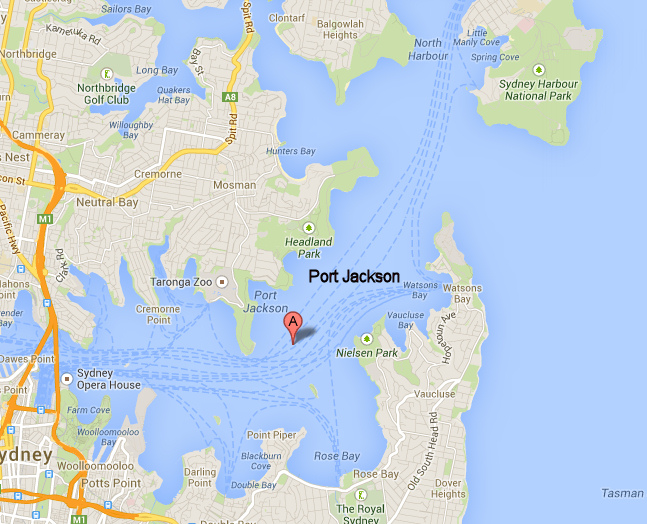
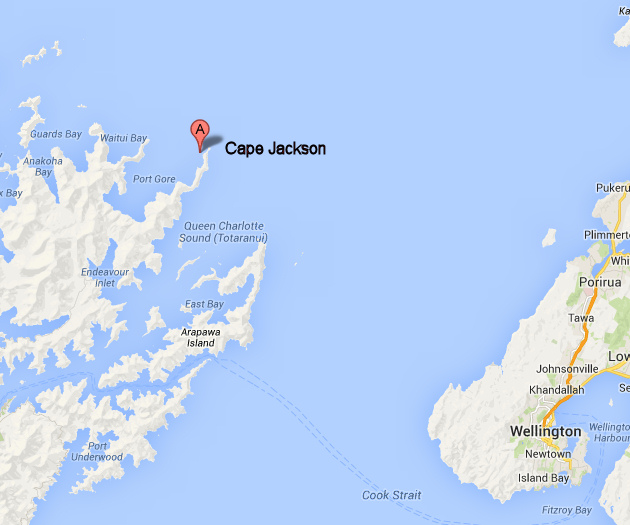
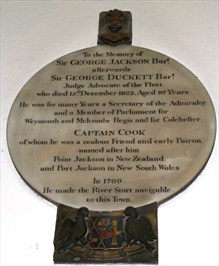
Charles Dingley was born in 1711. He and his elder brother Robert were trading partners with an agency in St Petersburg. He was politically ambitious and called his house in Hampstead, North End and Pitt House in turn. He played a leading role in the building of new roads in London, including the roads now called Marylebone, Euston and Pentonville Roads. He also owned considerable riverside property and wharfs, particularly in Limehouse, which was used for his import and timber businesses. He built a wind-powered sawmill in Limehouse but in May 1767 "A large body of sawyers assembled, and pulled down the saw-mill lately erected by Mr Dingley at Limehouse, on pretence that it deprived many workmen of employment." He was awarded a gold medal in December 1767 by the Society of Arts for his public spirit in erecting the windmill. However, he later received compensation of £2,000. In March 1769, several merchants met in Cornhill, in order to sign "an address to his majesty". A warm debate ensued which came to blows between Dingley and a Wilkes' supporter. This became known as "The Battle of Cornhill". Charles married Elizabeth Bois in 1746 and they had three children. Two died young but in 1768, Susannah Dingley married a young man, John Smith Meggott who became, briefly, Charles's trading partner. For a fuller biography of Dingley, including a copy of his will, click here William Masterman was born in Yorkshire in 1722. He took his articles as a solicitor and joined a practice in London in 1745. He became involved with John Robinson, who managed election business for Lord North and gained as a patron, Lord Edgecumbe. In 1764, he acquired or inherited the Trinity and Restormel estates in Cornwall. He continued his London practice for several years by then in partnership with John Lloyd at least until 1779. In 1780 he secured election as the Member of Parliament for Bodmin. and at about this time he gave up his active work in the London practice which had provided him with a “very independent fortune”. However, he came to the House too old to make his mark. He joined the silent ranks of the “party of administration”. No speech by him was ever reported. In 1783 we went over to Pitt but in the general election of 1785 he lost his seat. He continued to be involved in Cornish politics up to his death in July 1786. After his death his properties, which spread over six counties, were valued at £125,000. For a fuller biography of Masterman click here. George Jackson, naval administrator and judge, was born 24 October 1725, probably in Yorkshire. He was the third but oldest surviving son of George Jackson of Hill House, Richmond, Yorkshire, and is wife Hannah,. George entered the Navy Office as clerk to the Clerk of the Acts in 1743. In 1755 he became chief clerk to the clerk of the acts and from 1758 to 1766 was assistant clerk of the acts. On the recommendation of Prime Minister William Pitt, he was then transferred to the Admiralty as second secretary to the board and first clerk of the marine department. In 1768 he was made Judge Advocate of the Fleet, a position he held until his death. He also served as a Member of Parliament for Weymouth and Melcombe Regis (1786–1788), and Colchester. He gained the Colchester seat with government support in 1788 and though unseated on petition, regained the seat at the 1790 election and held it until the 1796 election. He married his cousin Mary Ward in 1745 and they had three daughters. Mary died in 1754. Jackson was a "zealous Friend and early Patron" of Captain Cook who named Port Jackson in Australia and Point Jackson in New Zealand after him. This information was taken from Jackson's memorial plaque in St Michael's Church in Bishops Stortford.
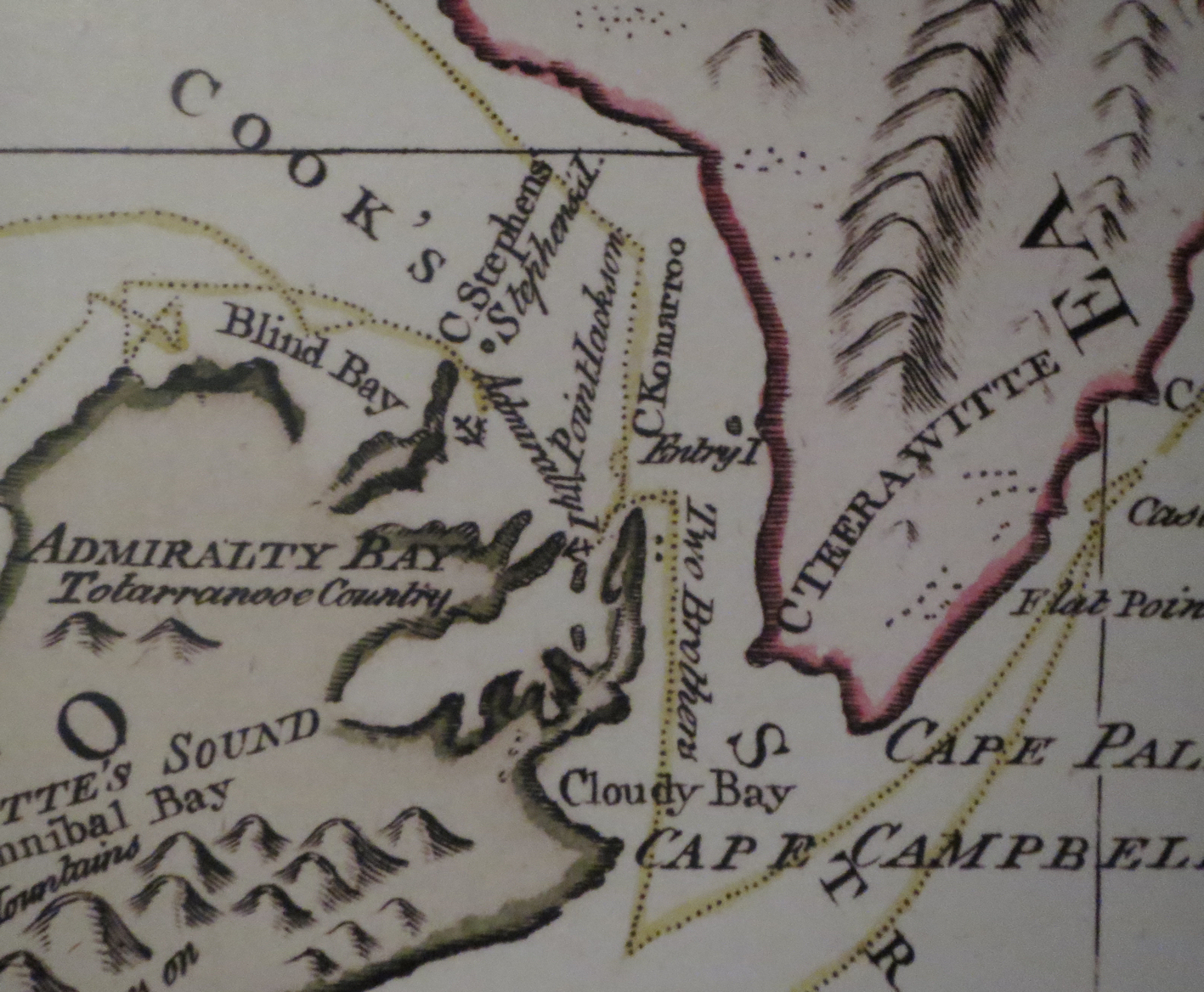
Port Jackson still retains the name and is the bay which contains Sydney Harbour. On 6th May 1770, Lieutenant Cook (as he then was), wrote in his log "...at noon we were...about 2 or 3 miles from the land and abrest of a bay or harbour within there appeared to be a safe anchorage which I called Port Jackson". However, a search for Point Jackson found no such place in New Zealand. An enquiry to www.captaincooksociety.com revealed that on 29th January 1770, Cook had named a peninsula at the north end of South Island, Cape Jackson. (40° 59' 33" S / 174° 19' 45" E).
But a visit to the Treaty Grounds at Waitangi in New Zealand revealed Captain Cook’s map of 29th January 1770 which clearly shows that the ORIGINAL name was Point Iackson
On 24th September 1766, work started under the direction of the engineer Thomas Yeoman. The contractors, William Glyn and his son and their gangs of navvies, took three years to canalise the river from the Causeway in Bishops Stortford to the junction with the Lee Navigation at Feildes Weir near Hoddesdon. Apart from being dredged, widened and, in places, re-routed and straightened out by the contractors, 13 wooden turf-sided and 2 brick-built locks had to be constructed. Three terminus basins were built in Bishops Stortford at the head of the navigation. Unfortunately no documents have survived from this time, so it is impossible to state accurately the financial outlays.
These were said to be "nearly £100,000." This is more than fifteen times as much as the original shareholders subscribed and leads to doubt as to the accuracy of this figure. The information comes from a piece of paper in Hertfordshire Archives Reference DP/21/29/32 containing papers of John Laybank Glasscock, a respected Bishops Stortford local historian. Although unsigned, the page would appear to be in Glasscock's handwriting. As will appear in comparison with the information below, there are some errors in this note and the cost estimate may be another. Comparing John Smeaton's contemporary figures for building parts of the Lee Navigation it would seem unlikely that the cost would be in excess of £20,000.
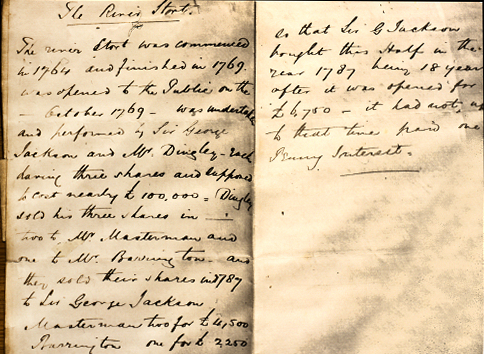
The Stort Navigation opened on the 24th October, 1769 with the arrival of three loaded barges at Bishops Stortford., two with 500 passengers each (perhaps an exaggeration, 50 passengers each would be more accurate!) and one with 15 chaldrons (19 tons 2½ cwt) of coal Thomas Yeoman announced “Now the town of Bishops Stortford is open to all the ports of the world” The report continues "There were three oxen dressed....(and) seven large hams were also dressed. The whole with turnips, carrots, greens and bread was supposed to be sufficient to dine 6,000 allowing each a pound." Another exaggeration - the population of the town in 1801 was 2.300! There were considerable rejoicings which resulted in Jackson writing in his diary “ 25th October. Left Stortford, carrying with me the noise of bells, music, singing, roaring and dancing, all together making such a headache, that I was more indulged in the quiet of my Sister’s house than I was ever before sensible of.”
These details were taken from George Jackson's diary and were included in 'Duchetiana, or Historical and Genealogical Memoirs of the Family of Duket, from the Conquest to the Present Time' published in 1869 by his grandson, Sir George Floyd Duckett.
Two letters which he wrote to John Laybank Glasscock (see above), about his grandfather are reproduced here, together with a brief biography of George Floyd Duckett. Charles Dingley died in November 1769, less than a month after the Stort Navigation opened. In his will, his share of the Stort Navigation passed to his son-in-law John Smith Meggott who, on 5th March 1770 sold the share to The Honourable Samuel Barrington, Vice-Admiral of the White for £2150. The Navigation continued in the control of Jackson, Masterman and Barrington until 1786. Samuel Barrington born in 1729, was the fourth son of the 1st Viscount Barrington. He entered the navy in 1740 and in 1747 had worked his way to a post-captaincy. He was in continuous employment during the peace of 1748-1756, and on the outbreak of the Seven Years' War served with Hawke in the Basque roads in command of the "Achilles". At the peace in 1763 Barrington had been almost continuously afloat for twenty-two years. He was next appointed in 1768 to the frigate "Venus". On his return home, he was offered, but refused, the command of the Channel fleet. His last active service was the relief of Gibraltar in October 1782. As an admiral he flew his flag for a short time in 1790, but was not employed in the French revolutionary wars. He died in 1800. For a fuller biography, click here In 1772, George Jackson commissioned Samuel Cockett to produce a map of the new Navigation. In the same year John Grundy carried out a survey of the Stort
Jackson married his second wife, Grace Neale on 9th September 1775 at St Margarets, Westminster. They had a son, George, born on 17th July 1777.
On 26th May 1786, William Masterman conveyanced his one-third share of the Stort Navigation to George Jackson for £4500 (Deed No 177 and Deed No 177a) This was a considerably more than his original investment of £2150, although it is not known how much money he had invested in the creation of the Navigation. Six months later, on 14th December 1786, Samuel Barrington conveyanced his share for £2250 (Deed No 178 and Deed No 178a) and George Jackson became the sole Proprietor. Shortly afterwards, on 19th April 1787, Jackson mortgaged the Navigation to George Brooks for £7000 + 5% interest. (Deed No 179) It is reported that he said “The Navigation to date has not paid a penny interest”.
There were challenges to the legality of the transfer of Charles Dingley's share to John Smith Meggott and thus to Samuel Barrington. This was dealt with in a document dated 10th May 1791. (Deed No 180) In this deed is the following statement "....the said George Jackson has laid out and expended in making continuing and improving the said Navigation divers large sums of money which greatly exceed the value of the share so transferred"
George Jackson was created a Baronet on 21st June 1791 and became Sir George Jackson of Hartham House in Wiltshire.
On 18th July 1791, with the legal problem out of the way, the mortgage with George Brooks was transferred to James Houson for £12,000 + 5% interest (Deed No 181 and Deed No 181a) This enabled Sir George to pay off George Brooks and have £5000 capital at his disposal.
The main traffic was malted barley downstream and timber, coal and grain as return loads. There are no early records of the tolls but in 1791 there is report of “18-19,000 sacks of flour and 97,000 quarters of malt carried this year”. A quarter sack of barley weighed 168 lbs. So assuming the same measure for malt this would equal 7275 tons or 180 barge loads of 40 tons burthen.
On 2nd November 1792, the last transfer of this well-travelled mortgage took place. Sir George took out a mortgage for £15,000 with Messrs Jeremiah Dyson, John Wilkins and Richard Jackson (who does not appear to have been a relation). These three gentlemen were acting on behalf of George Richard, Viscount Bolingbroke. With these funds he paid off James Houson in full. (Deed No 182 and Deed No 182a)
In 1795, Sir George Jackson issued the Stort Halfpenny token. Often wrongly called the Stort Penny, this was issued, along with many others, due to a national shortage of small denomination coinage. The tokens were redeemable at Bishops Stortford at the Company Offices at Swan Dock. Also in 1795, on the 31st October, he paid £2000 off the mortgage debt of £15,000. On 3rd February 1797, aged 72, Sir George inherited the Hartham estate of his second wife’s maternal uncle, Thomas Duckett, at Corsham, Wiltshire. However, under the terms of the eccentric uncle’s will (dated 27th February 1764), Sir George Jackson, Bart had to assume the name and Arms of that family by royal licence in order to secure the inheritance. He became Sir George Duckett of Hartham House, Bart. His wife Grace died at 15 Upper Grosvenor Street, London on 2 March 1798. It seems that considerable funds came with the estate, as on 5th April 1799 he paid off a further £3000 and finally on 2nd November 1802 he was able to redeem the mortgage completely with a single payment of £10,000. (Deed No 182b and Deed No 182c) A digression is necessary to look at the ill-fated schemes to extend the Stort Navigation to Cambridge and beyond. Since 1779 when the “Thames and Canals Committee” in London instructed Robert Whitworth to survey a route, there had been no less than five separate attempts to join the Stort and the Great Ouse. The early routes were strongly opposed by Lord Howard de Walden through whose estate at Audley End the proposed route passed. The Duke of Bridgewater was very much concerned with a proposal in 1801, even going to the extent of building a house in the area to live in while the scheme progressed. Unfortunately, when he died in 1803, the plan died with him. In 1811 and 1812 Sir George Duckett was involved with the Earl of Hardwicke in the last two attempts, the first of which failed at the committee stage in the House. The second succeeded as the London & Cambridge Canal Act, which received its assent on 9th June 1812. The Act failed due to lack of finance. The estimated cost was £570,000. There is a record in 1811 of 40,000 tons carried on the Stort including 203,000 quarters of malt. Despite this, in 1812, Sir George said that the first 20 years of the Stort Navigation had “not been an advantageous concern.” This date may be wrong, since the Stort had been open for 43 years in 1812.
On the 15th December 1822, Sir George Duckett died in his London home, aged 97. His tomb is in the churchyard at St Michael's Church, Bishops Stortford, This plaque is mounted on the wall to the right of the altar. For a fuller biography of Sir George, click here
He was succeeded as
owner of the Stort Navigation by his son, Sir
George Duckett, second Baronet. In 2020, I was sent copies of documents that had been tucked loose-leaf into the copy of "Duchetiana" held by the Society of Genealogists in London. One was a copy of the probate of the will Sir George Duckett. The second was a hitherto unknown document, detailing the "Measurement of the River Stort...." and dated 1824. The third, which was on several separate sheets but in a similar hand, "Observations upon the Utility of the Stort Navigation". This also previously unknown document was undated but, from the text, had been originally written before the navigation had been opened in 1769. Perhaps it had been copied from Sir George's original by his son.
On 29 Apr. 1807 Sir George, senior, wrote to Lord Sandwich: "Colonel Duckett my son....He is a young man of strict honour and great integrity, and has abilities that in all probability may render him a character of some distinction." George Rose (a close friend of the elder Sir George) also wrote to Lord Sandwich the same day, commending Duckett as "a most respectable young man of good landed property, and considerable right of succession’ and ‘of a most unimpeachable character as well as possessing considerable talents…... he is just the sort of young man I wish to see in Parliament" Sir George Duckett was M P for Lymington 1807-12 and Plympton October to December 1812 but vacated before the year was out. It does not appear that he attempted to return to Parliament. He did not realize his father’s great expectations. He was ‘never a man of business in any sense’. On 17th May 1824, Sir George obtained an Act to build the Hertford Union Canal, between the Regent’s Canal and the Lee Navigation in Hackney. This link was to make the connection between the two waterways easier by avoiding the semi-tidal part of the Lee between Limehouse and Old Ford. The 1¼ mile canal with three locks (also known as Duckett’s Cut) was completed by 1830 but because of high tolls levied both by Duckett and the Regent’s, it was never a success and closed in 1848. It was finally sold to the Regent’s Canal in 1857, who reopened it.
Duckett needed money to build the Hertford Union Canal and his subsequent financial problems were almost certainly caused by his involvement with this.
On the 17th November 1824, Sir George Duckett and his wife Isabella mortgaged the Stort Navigation for £40,000 at 5% interest, to Richard Hanbury Gurney, a banker of Norwich and a member of the Quaker Hanbury brewing family. (Deed No 183, Deed No 183a and Deed No 183b).
There is a strange document filed with Deed No 183 that appears to concern the River Stort and concludes ".....Whereupon a plea of Covenant was Sumoned between them in the same Court that is to say that the aforesd George & Isabella have granted to the aforesd Richard Hanbury the aforesd Tenemts cuts, streams & water-courses with the appurts, To have & to hold to the sd Richard Hanbury during the life of the sd Isabella Yielding therefore yearly to the sd George & Isabella & the heirs of the sd George one peppercorn only during the term aforesd if demanded And for this Grant ffine Agreement the sd Richard Hanbury hath given to the aforesd George & Isabella twenty two thousand two hundred & forty pounds sterling."
Isabella Duckett died on 10th October 1844. There is no further mention of this transaction. For comparison £22,240 is equivalent to nearly £3 million pounds today.
The next day, the Ducketts also took a further mortgage of £5,000 at 4½% interest with William Yatman. In 1825 he sold Hartham, the Duckett estate, possibly to Sir Benjamin Hobhouse. It appears that his financial dealings were steadily running into trouble and on the 22nd March 1832 his bank, Duckett, Morland & Co, was declared bankrupt. "WHEREAS A Fiat in Bankruptcy is awarded and issued forth against Sir George Duckett, Bart., Sir Francis Bernard Morland, Bart. and Thomas Tyringham Bernard, of Pall-Mall, in the County of Middlesex, Bankers and Copartners (trading under the firm of Duckett, Morland, and Co.) and they declared Bankrupts…" (London Gazette) The Stort Navigation, valued at £150,000 with an annual income of £5,000 was put up for auction along with the Hertford Union. The sale took place in London on 11th June 1833. (Click here for the brochure of the auction) There were no takers. At a meeting of creditors in November 1833 it was resolved to sell both waterways for £63,000. Again, there were no takers.
The Stort Navigation remained in the hands of the Official Receiver, Moses Asher Goldsmid, for the next 21 years. During this time little would have been done in constructive maintenance and the condition of the waterway would gradually have deteriorated.
There began a protracted legal battle between Sir George and Richard Gurney, as he tried to recover his £40,000. Duckett or his solicitors appear to have fought a lengthy rearguard action lasting 14 years, during which time they only paid the absolute minimum.
On 16th May 1842, the Northern & Eastern Railway reached Bishops Stortford and the Stort Navigation had competition in the carriage of goods in the Stort Valley. The tolls, which had been £5447 in 1838 and £4250 in 1841, fell immediately to £2593 and then averaged £2387 a year over the next 30 years.
On 23rd July 1844 an Indenture was drawn up regarding further security which was required by Richard Gurney and which also resulted in William Yatman's mortgage being reduced to just £1,000 due (Deed No 184)
Gurney finally lost patience in 1848 and filed a Bill of Complaint with the Lord Chancellor and after many more hearings and failures to pay, Gurney finally foreclosed on 2nd November 1853 and reluctantly took over the Navigation. Richard Hanbury Gurney died on 1st January 1854, and the whole process devolved on his executors, (who were the family firm, Gurney & Co) and who finally became the unwilling owners of a failing Navigation on the 16th September, 1854. (For the full story of this, click here)
Sir George Duckett, second Baronet, died on the 15 June 1856 age 78 at Gloucester Gardens Hyde Park and was buried at Kensal Green Cemetery. There is a biography here
One of the early actions of Gurney & Co was to appoint a manager to look after the river for them. John Poole Davis was working for the Eastern Counties Railway as the Assistant to the Out Door and Passenger Superintendent. He probably became the River Manager at the start of 1857. You can follow his career by clicking here
In 1857 and 1863 unsuccessful approaches were made to the River Lee Trustees, offering them the opportunity of taking over the responsibility for the Stort. In 1858 Nathaniel Beardmore, the Surveyor for the River Lee Trust , carried out a survey which reported on the state of the Stort. In 1858 he considered that 10 Locks out of the 15 were in a fair state of repair. By 1870 he reported that only 8 out of 15 were in a good state. He continued "It is therefore clear that the expenses charged for maintenance have not kept this expensive part of the Navigation repair up to the mark..." (NA Rail 845/17)The Lee's Engineer. Nathaniel Beardmore carried out a survey of the Stort in 1858 .
On 7th October 1864, John Henry Gurney leased "a piece of ground and buildings at Bishops Stortford to John Laybank Glasscock, for 30 years at £5 per year, with a rider that Glasscock was "always to use the Stort Navigation for carriage of goods and articles." (Deed No 186) Glasscock was a respected local building contractor; he was the "Son" in "John Glasscock and Son", and a local historian who collected a number of documents relating to the Stort and its history.
A further attempt to sell was made in 1868, after the Lee Conservancy Board had succeeded the Lee Trustees. The Board established purchase powers under Acts of 1868 and 1874 both of which imposed time limits. That the powers were not exercised in time was probably due to the poor condition of the river and the excessive costs involved in improving it.
After nearly 50 years of ownership by bankers, the River Stort Navigation now became the property of brewers. Possibly as the result of Hanbury family negotiation or pressure, Gurney & Co finally disposed of the Navigation to Truman, Hanbury and Buxton on 13th October 1873 for £15,000. (Deed No 187) The lawyers used an updated version of Samuel Crockett's 100 year old map to illustrate the remaining riverside properties being transferred as part of the Navigation. There is also a schedule of these properties attached to the deed.
There may well have been Hanbury family pressure brought to bear in this sale. They were almost certainly unwilling purchasers, because the next year another unsuccessful attempt was made to persuade the Lee Conservancy to take over. The Conservancy's Engineer, Mr Joseph Child surveyed the Stort in 1884 and the Conservancy were later quoted as saying it was “better to lose tolls from the Stort than take it over and be compelled to keep it in an efficient condition”. To be fair to both Gurney & Co and the brewers, both companies did maintain (and make a number of repairs to) the Navigation.
An extract from the Minutes of the Lee Conservancy Board of 23rd November, 1888. "The Clerk reported that Mr J P Davis, Manager of the River Stort, had informed him that the owners, Messrs Truman, Hanbury and Co; were in negotiation with a firm for the sale of the whole concern for £500...the Board did not think it advisable to entertain the question"
A further extract continues the history: 19th July 1889 " ...Messrs Truman, Hanbury & Co had just sold to him the undertaking of the Stort Navigation; and that he hoped that the amicable relations which had hitherto existed between the Lee and the Stort would continue..."
Truman, Hanbury & Buxton finally wrote the Stort off their books on 27th June 1889 (Deed No 188 and Deed No 188a), when they sold it to John Poole Davis, a former engineer, surveyor and manager of the Navigation, for £100. The schedule attached to this deed revealed that the brewers had already sold portions of land around the head of navigation and at South Mill in Bishops Stortford, and a portion at Sawbridgeworth for an undisclosed price. In the deed "on the occasion of the sale of a portion of the lands comprised in the principal Indenture to one Edmund Cornell a verbal undertaking was given .... to the said Edmund Cornell to pay a sum of five pounds per annum to the Trustees of the Charities of Bishops Stortford Parish ....and the said John Poole Davis hath agreed ...that he should enter into the covenant."
John Poole Davis owned the waterway for just nine years. He has gained a reputation as an asset-stripper. On 23rd May 1892 he sold a small piece of land near the South Mill Lock House in Bishops Stortford to Mr J Taylor. No price is recorded for this transaction and two months later on 29th July 1892, he sold "a slip, piece or parcel of freehold meadow or pasture land …near South Mill" to Sir Walter Gilbey for £80. (Deed No 195). The third and last sale is recorded in an indenture of the 30th January 1893 which shows that Davis sold part of Latton Island to a Mrs Ann Sadgrove but again there is no record of the price.
These appear to be the only sales of property that he made during his ownership of the Stort Navigation so his reputation seems to be ill-founded. It is possibly based on a report written in 1902 by George Corble, the Lee Conservancy Board's Clerk, concerning the possible purchase of the Stort. "Land. - There is none to offer. In 1870 the Engineer reported "There are many strips and wide banks alongside the River suitable for depositing dredgings, etc, but not of intrinsic value for sale, nor should they be sold." To that Mr Tween (the Conservancy’s Engineer) adds:- "Unfortunately the late Mr Davis thought otherwise, and sold every piece he possibly could" ". This would appear not to be true. The largest sale of Stort land took place before he bought the Navigation.
However, whilst it is a pleasure to repair his reputation in commercial terms, there is an historical bone to pick - the lack of original and old records for the Stort. This may be explained by this extract from Charles Tween's Engineer's Report of 23rd January 1920. "A large number of documents and plans relating to the Stort were taken away by the late Mr J Poole Davis, and as these may be in the possession of his assigns, I would suggest that a few advertisements be issued with a view to their recovery" There was a handwritten note added "to next meeting". (LMA ACC 2423/018) There were no further entries. If there is anyone out there who has a bundle of old documents.....
He owned the waterway for just nine years and made a number of improvements or at least repairs and replacements, probably paid for by the tolls. He increased these on 1st April 1892, with the following announcement in the London Gazette: “THE RAILWAY AND CANAL TRAFFIC ACT, 1888. Stort Navigation. Proposed Revision of Tolls for Traffic on the Stort Navigation. "NOTICE is hereby given that, pursuant to the Railway and Canal Traffic Act, 1888, the Stort Navigation has submitted to the Board of Trade a revised schedule of maximum tolls proposed to be charged by the said Navigation. Printed copies of the proposed schedule can be obtained, at the price of one shilling, at the principal office of the Navigation, Latton Island, Harlow, Essex, or on application to the Toll Collector at Roydon, on the Navigation. Anyone wishing to raise any objection to the proposed schedule may forward, by post a notice of objection to the Board of Trade, marked on the outside of the cover enclosing it, “Railway and Canal Traffic Act, 1888." Notices of objection must be transmitted to the Board of Trade so as to reach there on or before |the expiration of eight weeks from the 2nd day of April, 1892. The date on which the said term of eight weeks will expire is the 27th day of May, 1892. Every objector must at the same time transmit to the Proprietor of the said Navigation, a copy of the notice of objection, otherwise the objection will be liable to be dismissed without being heard. Due notice will be given of the time appointed for hearing and disposing of notices of objection. JOHN POOLE DAVIS, Proprietor of the Stort Navigation. Latton Island, Harlow, Essex”
Unfortunately no record remains of the income or expenditure during his ownership. From the toll figures that are recorded before and after his time as owner, he probably averaged about £1000 per year.
He sold the Stort Navigation to Sir Walter Gilbey, the wine merchant and philanthropist (although he is probably best remembered for the gin that bears his name....), for £500 on 22nd July 1898. (Deed No 190 and Deed No 191). John Poole Davis was the only owner who sold the Stort for more than he paid!
The £5 annual payment to the Bishops Stortford Charities may have been a burden to Davis. It doesn't sound very much today but £5 in 1889 would have bought £468 of goods today. Davis was already negotiating with Gilbey prior to the sale of the river. There is a deed recording Gilbey's "Conveyance of a freehold rent charge of £5" in which Gilbey bought the £5 annual rent charge for a single payment of £160 to the Charity Commission. (Deed No 189). Strangely, the Deed is dated 12th April 1898 - fourteen weeks before Gilbey actually bought the Stort. It appears that Sir Walter Gilbey bought the Stort Navigation as a philanthropic gesture to keep the river open for the benefit of Bishop Stortford. It was a gesture that was to cost him a considerable sum of money. For a brief biography of Sir Walter, click here. In 1900 he recommenced negotiations with the Lee Conservancy to sell them the river, but the prospect of owning a low income navigation in poor condition did not appeal. The tolls in 1901 were £927. The next detailed survey, written by Mr Charles Tween, was dated October 17th, 1901. Comparison of the 1901 and 1884 surveys gives the feeling that Mr Tween had Mr Child's 1884 report at his elbow, while he was writing at his desk. A hand-written memo, dated 5th July 1902 was sent to Messrs Trenchard and Gardner, members of the Lee Conservancy Board, with various recommendations including one that stated that Sir Walter should not be offered more than £2000 for the Navigation..... . On 25th July 1902, The Lee Conservancy Committee met to consider a letter from Sir Walter, dated 11th July 1902 "....that the sum of £2,500 which I named to you as the price might be an obstacle in the way of purchase by the Lee Conservancy. I have in consequence looked at the figures more carefully and altho' this sum was fixed by me as being the amount I had actually expended on the Stort with interest at 5 per cent, I think I can see my way to reducing the amount by some £500 if the Lee Conservancy were willing to purchase....I may say that I bought the Navigation as a public matter to save it falling into the hands of the Railway Company or from becoming derelict and since I bought it the whole of the receipts and more have been expended on its upkeep and I have had all the responsibility and risk which if it is not purchased by the Lee Conservancy, I shall seek to minimise by forming a small limited Company. I do not desire to sell to anyone but a public body, such as the Lee Conservancy, who I think are the proper persons to have it....." The Committee recommended that, subject to the Mill owners agreeing to maintain proper head levels and the Hertfordshire and Essex County and Town Councils agreeing to take over the the support and maintenance of the road bridges, purchase might proceed.
The Board disagreed.
In 1904 the tolls were £615. Sir Walter Gilbey formed the Stort Navigation Company on 24th May 1905 and on 21st July, transferred ownership of the river to the Company for £5,000. That was 4993 £1 shares and £7 cash. (Deed No 192 and Deed No 193a)
By 1907 the tolls had dropped to £319 and in October of that year the Lee Conservancy considered that it would take £10,800 to bring the Stort up to a condition to take 65 ton barges. They requested the Metropolitan Water Board to pay a contribution to the dredging of the River on the grounds that any refurbishment would secure "a material improvement in the purity of the water". The MWB offered £500 and when the Lee Conservancy finally took over the Stort Navigation in 1911, they kept to their agreement. (Deed No 217)
The local authorities along the river had agreed "under certain conditions" to pay for the repair, improvement and upkeep of the road bridges in each of their areas after the work of rebuilding the River was completed. These were at Roydon, Parndon, Burnt Mill, Sheering Mill, Sawbridgeworth, Spellbrook, Twyford and South Mill.
The Conservancy entered protracted negotiations with Gilbey, who continued to request that he recover his out-of-pocket expenses, which had now risen to £2736, although he again said that he would consider "reducing the amount provided there is a public demand that the river should be taken over by the Conservancy". On 13th January 1908, the Board informed Sir Walter Gilbey that "they have now ascertained the views of the Local Authorities in the Stort Valley on the matter and find that they are unanimously of the opinion that it would be in the interest and to the advantage of the districts adjacent to the River Stort if the Navigation were acquired by the Conservancy".
On 11th February 1908, Sir Walter again reduced the sale price to "£2000, excluding from sale the Cottage at Latton Island." The Board adjourned consideration of his reply and turned their attention to the Millers, inviting them to a meeting on Monday 2nd March 1908.
Messrs A E Ayling of Roydon Mill, R E Smith of Parndon Mill, John Kirkaldy of Burnt Mill, A Savill (representing L W Arkwright) of Latton Mill, T Burton of Sawbridgeworth Mill, G A Wallis from Hallingbury Mill and J Lawrence of Twyford Mill attended the meeting. "The Chairman stated that all the Company's negotiations would be thrown away, and any expenditure...........would be rendered useless unless they could first come to a definite understanding with the Millers as to the level of the water on the sills of the Locks below which they would not draw". Considerable discussion ensued and eventually it was arranged that the Engineer and Manager (Charles Tween) should confer with each Miller individually.
At these meetings each Miller had said that they required the "old navigation level" but this, Tween said, would entail the lowering of the sills of practically all the locks on the river. The Millers were invited to another meeting. Although there is no mention in the minutes of the details, it was recorded that "Mr Burton ...and others were prepared to agree to the terms put forward for Twyford Mill." However, this may have referred to the question of the tolls that they could charge, as this letter from Thomas Burton, Miller at Sawbridgeworth, does not specify agreement on any particular subject. "The Mills, Sawbridgeworth, Herts, 28th Sep. 1908, Dear Sir, We are much obliged for your letter...informing us that, in the event of the Lee Conservancy acquiring the Stort Navigation they have no intention of endeavouring to interfere with the rights of the Millers and Mill Owners. The Millers and Owners of the Stort Navigation have always worked amicably together in the past and if your Board acquires the Navigation the Millers will certainly endeavour to work in a friendly way with you, and if it is as stated in your letter, the Board's desire to dredge and keep the Navigation in working, there should be no difficulty in doing so in the future..." In the light of subsequent events, this letter was simply political pandering as the lack of agreement with the Millers over head levels was by far the biggest stumbling block to the Conservancy's takeover. On the 15th December 1908, Sir Walter wrote to the Board "The annual charges, the upkeep generally is serious and I ask for your assistance in its disposal - I will accept any reasonable terms you may fix" On 21st December, the Board proposed that they should offer £500 plus whatever contribution could be obtained from the Local Authorities. But then the Navigation itself interrupted proceedings.
At 11pm on 20th April 1909, the northern side of Brick Cistern Lock at Roydon collapsed, trapping all bar one of the Stort barges above the blockage. The Stort Navigation Company started repairs in a leisurely fashion with just six men digging a ramp to start clearing the lock chamber. The Conservancy’s engineer reported that "at that rate the Navigation would not be open for several years, thus depriving the Conservancy of the tolls the Stort barges paid on the Lee." (The Board helped in repairing the lock and the Navigation reopened on 4th November 1909)
Sir Walter Gilbey immediately offered the Stort Navigation to the Conservancy without "requiring any payment in return" from them and in response to this the Board advised him that they would "now proceed to re-consider the question of making arrangements with the Millers as to their water rights, etc".
A lively and occasionally heated conference was held at The Great Eastern Hotel, Liverpool Street on Friday 15th October 1909, under the chairmanship of Mr Herbert Nield. It was attended by 43 representatives from the Lee Conservancy, Essex and Hertfordshire County Councils, five local councils, the Metropolitan Water Board and The River Stort Navigation Company. three local traders and ten millers. The Conference ended with everyone in general agreement concerning the wisdom of the Board taking responsibility for the Stort and spending in excess of £10,000 in rebuilding and dredging it - except the millers. They were protective of their rights.
But even they, in the end, had to bow to the pressure of opinion and, one by one, they came to agreements with the Lee Conservancy.
The first to sign, on 24th June 1910, was John Kirkaldy Ltd, who were marine engineers of Limehouse in London. They bought Burnt Mill in 1885 and built a factory on the site. They did, however, still have a responsibility for the weir. (Deed No 205 and, later, Deed No 205a). Second, on 26th July 1910 was the owner of Hunsdon Mill, who still had the duty to maintain and operate the sluices and weirs at the site of the former mill. (Deed No 207). Then the millers or the owners of the other mills gradually came to agreement.
6th September 1910 Hallingbury Mill Deed No 201 30th September 1910 Roydon Mill Deed No 208 14th February 1911 Sawbridgeworth Mill Deed No 202 27th February 1911 Latton Mill Deed No 204 22nd March 1911 Harlow Mill Deed No 203 26th May 1911 Twyford Mill Deed No 200 17th July 1911 Parndon Mill Deed No 206
The individual deeds that each miller signed were broadly the same with a few interesting exceptions. They all agreed..... 1) not to draw down the water more than 12 inches below a set marker above their respective mills, with the exception of the millers at Latton and Roydon who both agreed to a 6 inch limit. 2) not to pen up the river higher than the agreed head at each Mill 3) not to impede traffic working on the river 4) to permit the Lee Conservancy Board to fill in the sides of the (turf-sided) locks where required. 5) to give the Board a month's notice if they (the millers) required to draw down the water above their Mill for repairs.
There was no mention of tolls in any of the agreements, with two exceptions. The owner of Hunsdon Mill agreed "not to levy tolls on barges passing through", which was acceptable since his Mill had been demolished in 1902. The Latton agreement states "Nothing in this agreement shall curtail or interfere with the rights of the (owner or tenants) under the River Stort Acts and they shall be at liberty to appoint any one they may choose to collect any Mill Tolls payable under such Acts." Again it is understandable, since in 1908, the Mill was in a very dilapidated state and had not been used for many a year. The Lee Conservancy Board were not giving anything away by allowing this.
Finally, on 8th September 1911, the Lee Conservancy Board paid a nominal 5 shillings for the ownership of the Stort Navigation. The transfer is Deed 194. The conveyance is recorded, in full, in a bound volume known as Deed No 193, complete with a detailed map.
The Board had already drawn up agreements with both Herts and Essex County Councils concerning the Stort bridges at Roydon, Parndon, Burnt Mill, Sheering Mill, Sawbridgeworth, Spellbrook, Twyford and South Mill. The care and upkeep of all the bridges was transferred to the relevant local authorities.
Faced now with the expenditure of a large sum of money, the Board applied to the Treasury for a loan from the Development Fund. The first request was for £13,000 which the Board felt would cover the cost of the work. The loan was approved on 12th July 1912 (Deed No 218). On 16th March 1915 a further advance of £7000 was granted. (Deed No 218a)
In 1912, the Lee Conservancy commenced improvements which included replacing the 13 turf sided locks, rebuilding the only other brick lock at Harlow Mill and dredging throughout. The dredging alone cost £11,722. The total cost of the reconstruction was £54,186 16s 7d. With the interruption of the First World War the works continued until 4th July 1924. At the opening ceremony on that day the Rt Hon Harry Gosling, the Minister of Transport officially reopened the Stort Navigation, saying,” The Stort is now open and available for the passage of barges of 60 tons from Bishops Stortford to the Thames. It now remains for the Local Authorities and traders near this reconstructed waterway to utilise it to the fullest extent and thus compete with the railways in keeping down freightage and to the relief of the now congested road traffic”
The work carried out by the Lee Conservancy 80 years ago and maintained by them up to 1948, has been continued by British Waterways and their successors in 2012, the Canal & River Trust, and has left us with a beautiful, unusual river navigation which deserves to be explored.
To bring this story up-to-date, the more recent changes to the river have been at each end, at Roydon and Bishops Stortford. In 2012, just above Lower Lock, a new side lock was built to connect with a 32 acre flooded gravel pit on the west side of the Navigation, which had 315 new mooring berths and facilities provided by Roydon Marina Village. In Bishops Stortford, starting in 1969, the course of the river was re-routed in preparation for the Jackson Square development.
Wharf House, built next to that wharf and demolished in 1973, was one of George Jackson’s houses but he rarely lived there, preferring his other houses at Roydon and in London. The modern route reflects far back into history, when the Stort (Stour in those days, if it had a name at all) fed the moat of Waytemore Castle, built between 1086 and about 1135. Another historical circle has been created with the opening of a Wetherspoon’s pub at the junction of the southern end of the Hockerill Cut and the remaining truncated arm of the original course. It is called The Port Jackson. (Look back near to the beginning of this history and the map of Sydney Harbour) And if you visit Port Jackson (pub not harbour) and sit outside looking at the bridge over the end of the truncated arm, you will find another bit of Stort history.
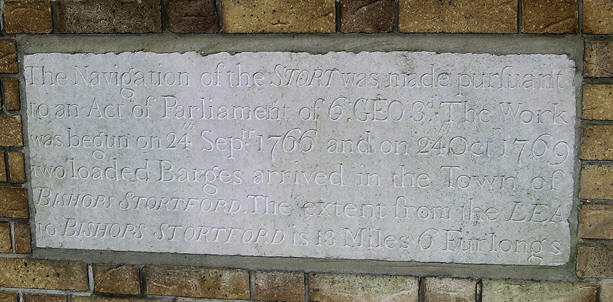
Set in the bridge parapet is a carved stone, which commemorates the opening of the Stort Navigation. It sat for many years in the British Waterways Yard at Enfield. It reached its (hopefully) final resting place, close to where it must have been first unveiled, perhaps on that momentous opening day on 24th October, 1769.
The Navigation of the STORT was
made pursuant |
|
j
This site was last updated 28-Nov-2020

 The
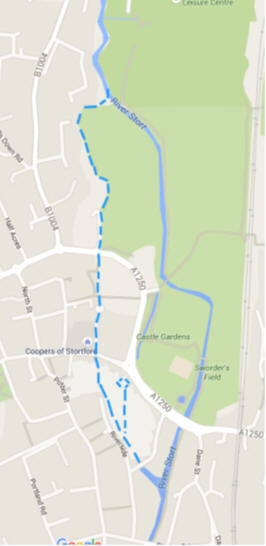
original course is shown on the map as a blue dotted line. Today this
route would be under the Waitrose car park, Old River Lane, the bridge
in Bridge Street, Jackson Square and the Sainsbury Supermarket. The
original course would have powered the Town Mill (which closed in 1890
and was demolished in 1895) and was in Bridge Street, almost where the
entrance to Jackson Square is today. Sainsbury’s is built over the old
Terminus Wharf.
The
original course is shown on the map as a blue dotted line. Today this
route would be under the Waitrose car park, Old River Lane, the bridge
in Bridge Street, Jackson Square and the Sainsbury Supermarket. The
original course would have powered the Town Mill (which closed in 1890
and was demolished in 1895) and was in Bridge Street, almost where the
entrance to Jackson Square is today. Sainsbury’s is built over the old
Terminus Wharf.